

Your motorcycle's unsettling rear-end wobble during aggressive cornering isn't necessarily a suspension failure; it's a structural deficiency in your stock chassis. Most riders realize that high-torque V-Twins demand more than what factory-stamped steel can provide, yet they continue to fight chassis flex and excessive unsprung weight. Upgrading your swing arms is the most effective way to stabilize the rear of your bike and ensure your power actually reaches the pavement without the drama of mid-corner oscillation.
We understand the frustration of a machine that feels disconnected when you push it to the limit. This guide will help you master the technical criteria for selecting a performance component that transforms your handling and stability. You'll learn how precision-engineered billet aluminium reduces mass to improve suspension response while providing a rigid foundation for your drivetrain. We'll also examine the critical role of engineer-certified designs in achieving a precision-engineered look and ensuring seamless compatibility with 108mm radial brake upgrades for your Softail or Touring model.
Key Takeaways
- Understand the physics of rear-end stability by examining how the swing arm manages lateral forces and torsional stress during aggressive cornering.
- Compare the structural advantages of CNC-machined 6061-T6 billet aluminium against factory stamped steel to realize maximum weight savings and rigidity.
- Ensure your chassis is ready for elite stopping power by verifying technical compatibility between your new components and 108mm radial mount brake arms.
- Evaluate the specific engineering differences between the Mako and Vector series to select the ideal high-performance swing arms for your Touring or Softail frame.
- Implement professional installation standards using titanium bolt kits and exact torque specifications to maintain structural integrity and engineer-certified safety levels.
Understanding the Role of High-Performance Swing Arms in V-Twin Handling
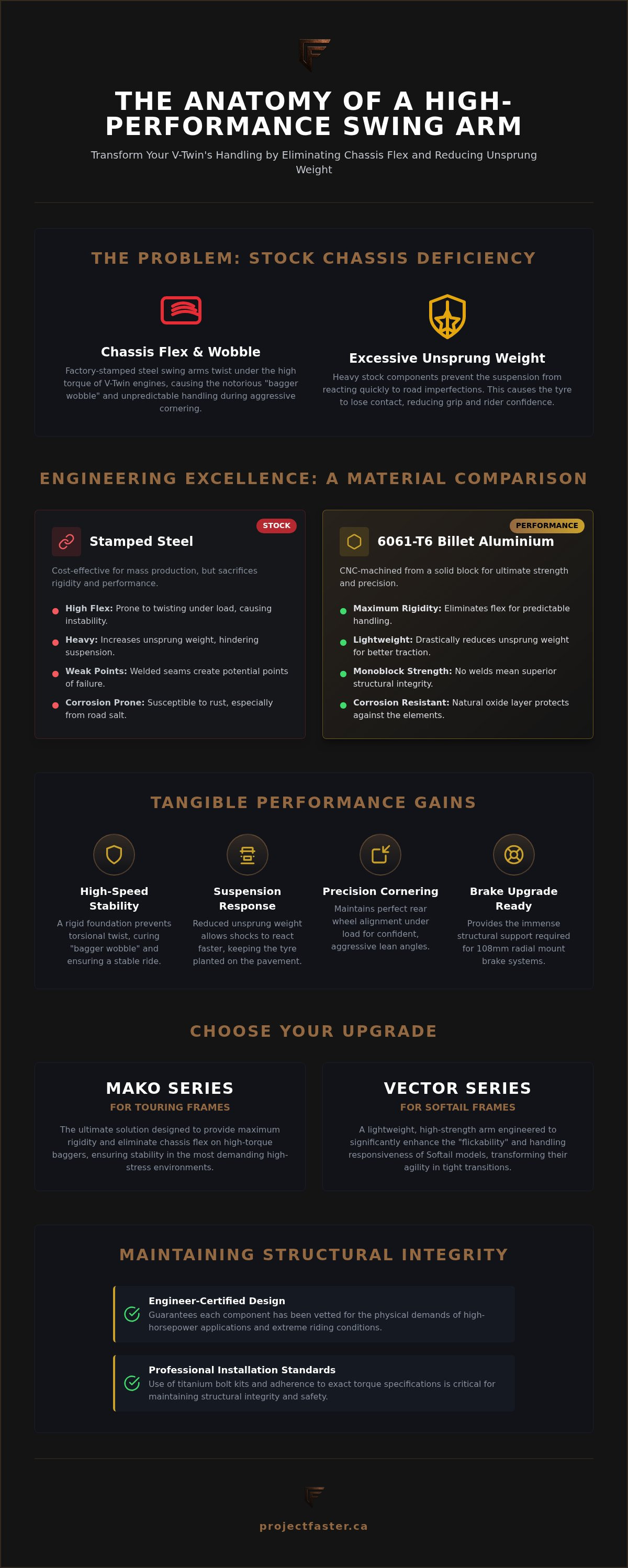
The motorcycle swingarm serves as the structural foundation of your bike's rear geometry. It functions as the primary linkage connecting the rear wheel to the frame, acting as the pivot point for the entire rear suspension system. For high-performance V-Twins, this component must manage immense lateral forces and torsional stress. Stock stamped-steel swing arms are often engineered for cost-efficiency rather than extreme rigidity. They frequently fail to maintain alignment when subjected to the high torque of modern or modified engines. This mechanical weakness allows the rear wheel to deviate from its intended path, compromising both safety and cornering precision.
Unsprung weight plays a critical role in how your motorcycle interacts with the road. When the mass of the rear assembly is too high, the suspension cannot react quickly enough to surface irregularities. This delay causes the tyre contact patch to bounce, losing grip and reducing rider confidence. High-performance replacements solve this by utilizing superior materials and manufacturing techniques to optimize the strength-to-weight ratio.
The Physics of Rear-End Stability
Chassis flex is the primary contributor to the notorious "bagger wobble" experienced by many Touring riders. This instability occurs when the frame and swing arm twist in opposite directions under load, creating a self-sustaining oscillation at high speeds. A rigid, engineer-certified arm eliminates this movement. It ensures that power is delivered directly from the belt or chain to the pavement without being absorbed by a flexing chassis. This rigidity also stabilizes high-speed tracking by maintaining a consistent wheelbase. It prevents the subtle geometry shifts that make a bike feel "loose" during aggressive acceleration or hard lean angles.
Performance Benefits of Upgrading
Reducing unsprung weight is a fundamental objective for any serious performance build. Lighter swing arms allow the rear shocks to dampen movement more effectively, keeping the tyre firmly planted. This improvement in suspension response significantly enhances the "flickability" of heavy cruisers, making them feel more responsive in tight transitions. Beyond the mechanical advantages, the industrial aesthetic of precision-machined billet aluminium provides a level of structural quality that stock parts cannot replicate.
Upgrading to a Mako swing arm or a Vector Billet Swing Arm offers immediate gains in handling. These components are designed for riders who push their machines in high-stress environments where durability is a requirement. They provide the necessary strength to support radial brake upgrades while ensuring the rear end remains composed under extreme braking forces. Choosing a component with engineer-certified status guarantees that the part has been vetted for the physical demands of high-horsepower applications.
Engineering Excellence: Billet Aluminium vs. Stamped Steel Construction
Superior performance starts with material selection. Factory-produced swing arms typically rely on stamped steel components welded together in high-volume production lines. This method prioritizes cost-efficiency over structural rigidity. In contrast, CNC-machined billet aluminium offers a level of precision that eliminates the inconsistencies found in cast or stamped parts. Billet aluminium is a solid block of material machined into a final shape for maximum grain structure integrity. By carving the arm from a single block of 6061-T6 aluminium, we remove the reliance on welded seams; these are often the first points of failure under extreme torsional stress. Research into the effect of swing arm stiffness demonstrates that chassis rigidity is paramount for maintaining rear-wheel alignment during high-speed manoeuvres.
For riders in Canada, the natural longevity of aluminium is a significant factor. While steel is susceptible to oxidation and corrosion from road salt and humidity, aluminium naturally forms a protective oxide layer. This ensures that your performance components maintain their structural integrity and finish through diverse seasonal conditions. The transition from standard automotive steel grades to aircraft-grade aluminium isn't just about aesthetics; it's a fundamental upgrade in materials science that addresses the mechanical weaknesses of factory equipment.
The Strength-to-Weight Ratio Advantage
The primary mechanical benefit of switching from stock steel to a billet aluminium arm is the drastic reduction in unsprung mass. High-performance swing arms can offer weight savings exceeding 40% compared to OEM steel versions. This reduction allows the rear shock to react more precisely to road imperfections because the suspension doesn't have to fight the inertia of a heavy steel arm. The result is a more planted feel and improved tyre contact patch consistency, which is vital when navigating unpredictable road surfaces.
Project Faster Engineering Standards
We don't rely on guesswork. Every component we produce undergoes rigorous CAD modelling and stress testing to ensure it can handle the high-torque output of modern V-Twin engines. Being "Engineer Certified" means our designs meet strict safety and performance benchmarks before they ever reach a customer's bike. You can learn more about our specific manufacturing process in The Engineering of Performance: A Guide to the Vector Billet Swing Arm. If you have specific technical questions about fitment or structural requirements for your build, feel free to reach out to our engineering team for detailed advice.
Key Factors to Consider When Upgrading Your Swing Arm
Selecting the correct performance component requires a thorough understanding of your motorcycle’s chassis architecture. While the aesthetic appeal of billet swing arms is undeniable, fitment must remain the primary engineering objective. Compatibility depends on several variables, including frame type, model year, and intended braking configuration. A mismatch in these specifications can lead to improper wheel alignment or compromised suspension travel, negating the performance benefits of the upgrade. Precision is the standard here; even a minor deviation in pivot width or axle spacing can introduce the very instability you’re trying to eliminate.
Hardware selection is equally critical for a successful build. High-performance assemblies require high-strength bolts to maintain the structural integrity of the pivot point and axle blocks. Using inferior hardware often results in fastener fatigue under the high-torque loads typical of modified V-Twin engines. Maintenance considerations also play a role in the selection process. Riders must choose between the raw industrial look of natural aluminium, the durability of an anodized finish, or the high-lustre aesthetic of polished surfaces. Each choice carries different long-term care requirements, especially when considering the impact of road debris and seasonal weather patterns.
Identifying Your Frame and Model Year
The 2018 and newer Softail models utilize a mono-shock rear suspension that requires specific mounting geometry. This differs significantly from the dual-shock configurations found on earlier frames or Touring platforms. If you’re building a Touring bike, the arm must accommodate wider tyres and the additional stress of heavy luggage loads without sacrificing rigidity. A common fitment error involves overlooking axle diameter changes between early and late-model years. Ensuring your axle blocks are sized correctly for your specific year is essential for a secure, vibration-free installation that preserves the engineer-certified safety of the component.
Brake and Suspension Synergies
A high-performance swing arm serves as a platform for further chassis refinements. Many riders plan for the PF Vector 108mm radial mount brake arm during their initial upgrade to ensure seamless integration. This allows for the use of modern radial callipers, which provide superior stopping power and heat dissipation compared to stock setups.
Adjustability is another technical advantage of aftermarket designs. Precision-machined axle blocks allow for more accurate belt or chain tensioning, which is vital for minimizing drivetrain lash. By aligning the rear wheel with surgical precision, you reduce wear on the belt and improve the overall efficiency of power transfer to the road. This synergy between the arm, the brakes, and the drivetrain creates a cohesive performance package that stock components simply cannot match. It’s about creating a unified system where every part supports the physics of high-speed stability.
Standout Selections: The Mako and Vector Billet Swing Arm Collections
Project Faster Inc. develops components for riders who prioritize mechanical integrity over superficial trends. Our lineup of billet swing arms represents the pinnacle of V-Twin chassis development. We focus on eliminating the structural weaknesses inherent in factory equipment through meticulous CNC machining. Whether you're piloting a heavy Touring machine or a modern Softail, these collections provide the rigidity necessary for high-horsepower applications. Each arm is a result of extensive stress analysis, ensuring that the final product can withstand the torsional loads that would deform standard stamped-steel parts.
Customization in our lineup goes beyond visual appeal. We offer diverse finish options, including hard-coat anodizing, to protect the aluminium from the elements. Completing your build with our titanium bolt kits ensures every fastener matches the quality of the arm itself. These hardware choices provide additional weight savings and superior corrosion resistance, which is vital for maintaining performance in various Canadian climates. Every component we sell is designed to function as part of a cohesive, high-performance system.
The Mako Billet Swing Arm for Touring Models
The PF Mako Billet Swing Arm - 2009+ Touring addresses the specific needs of the heavy bagger platform. Touring bikes carry significant weight and generate high torque, forces that often overwhelm the stock chassis and lead to instability. The Mako series utilizes an aggressive, pocketed design to provide a significant weight reduction without sacrificing structural strength. It's engineer-certified for safety, ensuring that every curve and dimension is optimized for maximum performance. This series is the definitive choice for riders looking to stabilize their rear end while achieving a precision-engineered look.
The Vector Billet Swing Arm for Softails
For the 2018 and newer Softail platform, the PF Vector Billet Swing Arm - Softail offers a precision-engineered solution for improved cornering clearance and high-speed stability. The rigid box-section design is specifically crafted to resist the torsional forces generated during hard acceleration. This rigidity is crucial for maintaining a consistent line through corners and preventing the "looseness" often felt with factory components. The Vector series focuses on stabilizing the mono-shock geometry, providing a more predictable feel that allows you to push your Softail to its technical limits.
If you're unsure which series best suits your specific performance goals or build requirements, contact our technical team for an engineering-focused consultation.
Completing the Build: Installation and Performance Integration
Installing high-performance swing arms is a task that demands mechanical precision and strict adherence to engineering standards. While many enthusiasts possess the skills for basic modifications, this specific upgrade involves the primary structural linkage of your chassis. Professional installation is highly recommended to ensure that every component is seated correctly and that the pivot point operates without friction. Using specialized tools, such as calibrated torque wrenches and laser alignment systems, is non-negotiable for maintaining the integrity of the build. Deviating from manufacturer-specified torque values can lead to hardware fatigue or premature bearing failure. Precision is mandatory. A machine this powerful leaves no room for guesswork.
Final adjustments define the success of your chassis transformation. Aligning the rear wheel with surgical accuracy ensures that the belt or chain tracks perfectly, minimizing drivetrain power loss and preventing premature wear. Proper tensioning is equally vital; a belt that is too tight can damage transmission bearings, while a loose belt leads to excessive lash and poor throttle response. After the initial assembly, a comprehensive post-installation test is required. We recommend a series of low-speed manoeuvres followed by a technical inspection to verify that all fasteners remain secure under real-world vibration during the first 100 kilometres.
Upgrading the Hardware
Stock fasteners are typically designed for the lower stress thresholds of factory stamped-steel components. When transitioning to a high-performance aluminium arm, upgrading to titanium hardware is a logical progression in materials science. Titanium offers a superior strength-to-weight ratio and exceptional resistance to the corrosive road conditions found across Canada. These kits ensure that your hardware matches the structural quality of the billet aluminium, preventing the galvanic corrosion that can occur between dissimilar metals over time. You can find detailed technical specifications in The Engineering Guide to Titanium Bolt Kits for Motorcycles. Using high-strength titanium fasteners provides the final layer of reliability for high-torque applications.
Final Performance Tuning
Once the physical installation is complete, the motorcycle requires a comprehensive re-evaluation of its suspension settings. Reducing unsprung weight fundamentally changes the damping requirements of your rear shocks. You'll likely find that the suspension reacts more quickly to road imperfections, necessitating adjustments to rebound and compression to maintain optimal tyre contact. It is also vital to verify clearance for high-performance exhaust systems, such as the PF Liberator, ensuring that the increased rigidity and dimensions of the arm don't interfere with mounting brackets or heat shielding. To ensure your entire rear-end assembly meets these elite standards, browse the full collection of engineer-certified components at Project Faster.
Elevating Your Chassis Performance Standards
Elevating your chassis to elite performance levels requires a fundamental shift in mechanical integrity. By prioritizing structural rigidity and reducing unsprung mass, you transform your motorcycle from a factory cruiser into a precision-engineered machine. Upgrading your swing arms is the most significant step you can take toward eliminating rear-end instability and ensuring that every bit of power generated is effectively transferred to the pavement. This modification isn't just about weight savings; it's about creating a stable foundation for advanced suspension and braking systems.
Project Faster components are precision CNC machined in North America and are Engineer Certified for maximum safety. This level of technical validation is why our designs are trusted by high-performance V-Twin builders who refuse to compromise on structural quality. Whether you are optimizing a Touring platform for high-speed stability or a Softail for improved cornering clearance, the transition to billet aluminium provides a measurable handling advantage that factory equipment cannot replicate.
If you're ready to master your motorcycle's handling and integrate elite-level components into your next build, contact our engineering team to discuss your specific technical requirements. We look forward to helping you realize the full performance potential of your machine.
Frequently Asked Questions
Will an aftermarket swing arm really improve my Harley’s handling?
Yes, an aftermarket arm significantly stabilizes the rear chassis by eliminating the lateral flex inherent in factory equipment. By replacing stamped steel with rigid billet aluminium, you reduce mid-corner oscillation and the notorious "bagger wobble." This structural upgrade ensures that your suspension works independently of frame movement, providing a more predictable and planted feel during aggressive acceleration or hard lean angles.
Is a billet aluminium swing arm stronger than the stock steel arm?
Yes, a billet aluminium arm provides superior structural integrity compared to stock steel. While steel is strong, factory arms rely on welded seams which are vulnerable to torsional stress. Our 6061-T6 aluminium components are carved from a solid block, ensuring a consistent grain structure throughout. This machining process eliminates the weak points found in mass-produced frames, resulting in a component that resists twisting under high-torque loads.
Do I need to upgrade my brakes when I install a new swing arm?
You don't have to upgrade your calipers immediately, but these swing arms are engineered to facilitate elite braking transitions. Our designs are specifically compatible with the PF Vector 108mm radial mount brake arm. This allows you to integrate modern radial calipers that offer superior heat dissipation and stopping power compared to stock equipment. Planning for this synergy during your initial build ensures maximum chassis performance.
What is the benefit of an engineer-certified swing arm?
Engineer certification provides technical validation that the component can safely withstand the physical demands of high-horsepower V-Twins. It means the design has undergone rigorous CAD modelling and stress analysis to meet specific safety benchmarks. For riders pushing their machines in high-stress environments, this designation offers peace of mind that the part won't fail under extreme torsional or lateral loads during high-speed operation.
Can I install a wider rear tyre with a Project Faster swing arm?
Many Project Faster designs accommodate wider tyre profiles, though specific clearance depends on your bike's model year and drivetrain alignment. The Mako series for Touring models is optimized for bagger platforms where larger tyres and heavy luggage loads are common. Always verify your specific fender and belt clearances before finalizing your build to ensure that the increased rigidity of the arm doesn't interfere with your chosen wheel size.
How much weight can I save by switching to a billet swing arm?
Switching to a billet component can reduce unsprung mass by over 40% compared to factory steel equipment. This reduction in weight allows your rear shocks to react with greater precision to road imperfections. By lowering the inertia of the rear assembly, you improve suspension response and overall flickability. This makes even the heaviest Touring bikes feel more responsive and composed during rapid transitions across various road surfaces.
Are these swing arms compatible with stock axles and bearings?
Yes, our swing arms are designed for seamless integration with stock axles and bearings for their respective model years. We include precision-machined axle blocks to ensure a secure fitment that preserves the factory geometry while improving adjustability. It's essential to verify your specific model year during the selection process, as axle diameters changed between early and late-model Harley-Davidson frames, affecting the required bearing specifications.
What maintenance is required for a billet aluminium swing arm?
Maintenance is minimal but essential for preserving the finish and structural integrity of the aluminium. We recommend regular visual inspections of the pivot hardware and axle blocks to ensure torque specs remain within the required range. If you choose a raw finish, occasional polishing may be required to prevent surface oxidation. Anodized versions simply require cleaning with non-abrasive solutions to maintain their protective layer and high-end industrial aesthetic.