

Most riders believe that chasing horsepower is the only way to build a performance Harley, but raw engine output is useless if your chassis cannot translate that energy to the pavement. You've likely experienced the unsettling sensation of mechanical flex during aggressive cornering or felt the sluggish suspension response caused by excessive unsprung weight. It's a common frustration where the bike feels like it's fighting your inputs rather than responding with mechanical precision. When building performance harleys, the primary objective is to create a balanced machine where structural rigour matches the high-torque demands of the modern V-twin.
This guide will show you how to transform a standard cruiser into a high-output machine by focusing on precision-engineered chassis components and functional hardware. You'll learn how to eliminate chassis flex, improve your power-to-weight ratio, and achieve professional-grade handling. We'll explore the technical advantages of billet aluminum swing arms, the weight-saving benefits of titanium bolt kits, and why high-HP exhaust systems must prioritize flow over simple acoustics to realize genuine performance gains.
Key Takeaways
- Understand the evolution of V-twin builds from aesthetic customization to a focus on structural integrity and thermal efficiency.
- Learn why chassis rigidity is the foundation of handling and how billet swing arms eliminate rear-wheel instability and mechanical flex.
- Discover how to optimize performance harleys by pairing high-output exhaust scavenging with the precision of radial mount braking.
- Identify high-impact upgrades that reduce unsprung weight and rotating mass to significantly improve suspension response and overall agility.
- Gain insight into the "Engineer Certified" philosophy that ensures every component is built to handle the physics of extreme performance.
Defining the Performance Harley: Evolution of the V-Twin Build
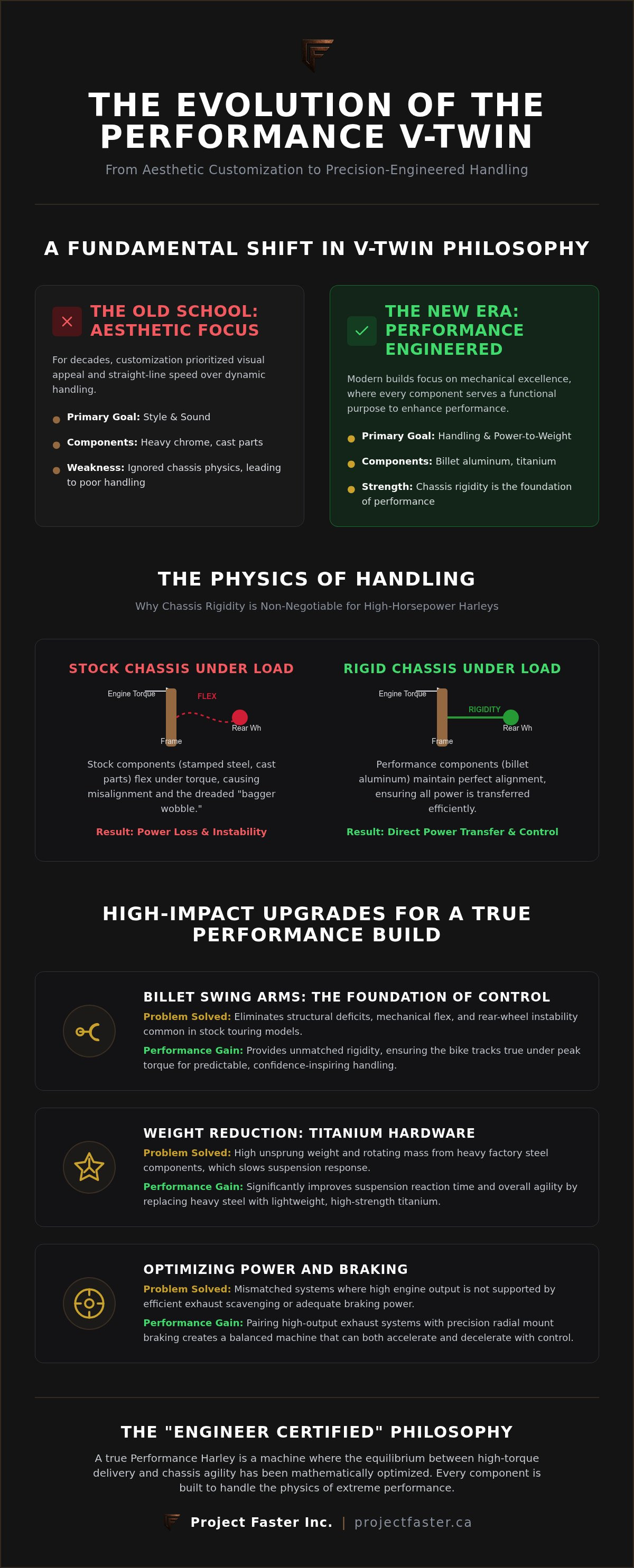
The V-twin landscape has undergone a fundamental transformation. For decades, customization was synonymous with aesthetic flair and chrome accessories. Today, the focus has shifted toward mechanical excellence. Modern riders prioritize how a bike manages physics over how it looks under a spotlight. This cultural shift has birthed the era of performance harleys, where every modification serves a specific functional purpose. The goal is no longer just about straight-line speed; it is about creating a machine that can accelerate, brake, and corner with the precision of a sport-tuned motorcycle.
While Harley-Davidson Twin Cam engines provided a solid foundation for performance seekers for years, the Milwaukee-Eight (M8) platform has significantly raised the ceiling. The M8 offers superior thermal efficiency and improved oil cooling, making it the ideal starting point for high-output builds. However, factory motorcycles are designed for the mass market. This means they are often equipped with cost-effective cast components that prioritize manufacturing speed over absolute rigidity or weight reduction. To surpass these factory limitations, aftermarket engineering must step in to replace compromised parts with precision-machined hardware.
The Rise of the Performance Bagger and Softail
The influence of professional racing, specifically the King of the Baggers series, has fundamentally altered street builds. Riders now demand sportbike-level handling from heavy cruisers. This requires a departure from the standard cruiser philosophy of plush comfort and straight-line stability. A performance-oriented build focuses on aggressive lean angles and high-speed corner entry. It transforms a bike that was once meant for relaxed touring into a weapon capable of carving through canyons with confidence. The difference lies in the details of the chassis and how the bike manages the massive torque of a built M8 motor.
Engineering Goals: Strength vs. Weight
Materials science determines the performance ceiling of any motorcycle. Stock cast parts are often heavy and prone to mechanical flex when pushed to the limit. High-performance builds utilize materials like 7075 billet aluminum and titanium to achieve a superior strength-to-weight ratio. By replacing heavy steel or cast components with lighter, more rigid alternatives, you reduce unsprung weight and improve suspension response. A true Performance Harley is a machine where the equilibrium between high-torque delivery and chassis agility has been mathematically optimized through precision engineering. This balance ensures that every horse-power generated is actually used to propel the bike forward rather than being lost to chassis distortion or sluggish handling.
The Physics of Handling: Why Chassis Rigidity is Non-Negotiable
High horsepower in performance harleys creates immense stress on the frame. If the swing arm flexes under load, the rear wheel loses its geometric relationship with the rest of the bike. This misalignment is the root cause of the notorious "bagger wobble" experienced during high-speed sweepers. Stock components, often made from stamped steel or heavy castings, prioritize production cost over structural rigour. By contrast, a rigid chassis ensures that the power produced by the engine is delivered directly to the ground without being absorbed by lateral movement. Understanding the link between chassis stiffness and handling is essential for anyone looking to push their V-twin beyond factory limits.
Maintaining perfect sprocket and wheel alignment is not just about stability; it is about efficiency. When a chassis twists, the drivetrain must work harder to overcome the friction caused by misalignment. Billet aluminum offers a significant mechanical advantage here. It provides a much higher strength-to-weight ratio than steel, allowing for a component that is both lighter and significantly stiffer. This structural integrity is the foundation of a predictable ride, ensuring that the bike tracks true even when the motor is delivering peak torque.
Billet Swing Arms: The Foundation of Control
The PF Mako Billet Swing Arm is engineered to address structural deficits in Touring models. Machined from solid billet aluminum, it provides a level of rigidity that cast parts simply cannot match. This stiffness is critical for maintaining perfect alignment under heavy acceleration or aggressive lean angles. When you eliminate the weak link in the chassis, you gain a predictable and stable platform that inspires cornering confidence. Every PF swing arm is Engineer Certified, meaning the design has been validated to withstand the extreme torque loads common in elite-level builds. If you have questions about specific fitment for your build, feel free to reach out to our engineering team for technical guidance.
Reducing Unsprung Weight for Better Suspension Response
Performance is as much about weight management as it is about strength. Unsprung weight refers to components not supported by the suspension, such as the wheels, brakes, and swing arm. Reducing this mass is vital because it allows your shocks to react more quickly to road imperfections. For 2018+ Softail riders, the Vector Billet Swing Arm serves this exact purpose. By shedding weight while increasing structural strength, the suspension can maintain better tyre contact with the pavement. This leads to a smoother ride and significantly improved traction during aggressive riding. Lighter components translate to faster recovery times for the suspension, ensuring the bike remains settled even on uneven surfaces.
Optimizing Power and Braking: The PF Performance System
High-output engines generate immense heat and kinetic energy. To maintain mechanical integrity, performance harleys must utilize a synchronized approach to power and braking. It is a common mistake to focus solely on the motor while neglecting the systems that control that power. Realizing genuine gains requires an exhaust system that manages gas velocity and a braking setup that provides unwavering consistency. When researching Harley-Davidson performance upgrades, it becomes clear that the most successful builds are those where the intake, exhaust, and chassis work in total harmony.
Exhaust Engineering: The PF Liberator Advantage
The PF Liberator High-HP Exhaust is not designed for volume alone; it is an instrument of gas dynamics. In a high-performance V-twin, the exhaust must create a scavenging effect that pulls spent combustion gases out of the cylinder head. This process creates a vacuum that helps draw in a fresh air-fuel mixture, directly resulting in increased torque and horsepower. Proper backpressure management is especially critical in Milwaukee-Eight builds, where improper flow can lead to torque dips in the mid-range. By utilizing high-grade materials that resist thermal fatigue, the PF Liberator ensures that the system maintains its structural integrity under the extreme temperatures of aggressive riding. Lighter than stock systems, it also contributes to the overall goal of weight reduction without sacrificing the durability required for long-term use.
Precision Braking with Radial Mount Technology
Stopping a heavy, high-speed motorcycle requires more than just large rotors. It requires a rigid connection between the caliper and the fork. Traditional axial-mounted brakes often suffer from caliper flex, which translates to a spongy feel at the lever during hard deceleration. The PF Vector 108mm Radial Mount Brake Arm solves this by securing the caliper in a way that eliminates lateral movement. This radial configuration ensures that the brake pads remain perfectly parallel to the rotor, providing a consistent and predictable bite every time you reach for the lever. This level of precision is a necessity when managing the increased velocities of a modified machine. By upgrading to radial technology, you bridge the gap between cruiser comfort and sportbike control. You can explore these engineering solutions in the Project Faster performance collection.
Selecting Components for a Performance Harley Build
A successful build is not a collection of random parts; it is a deliberate assembly of engineered solutions. When developing performance harleys, the most effective strategy begins with the chassis. As established in previous sections, a rigid swing arm is the primary requirement for stability. Once the frame is stabilized, the focus should shift to reducing rotating mass. Lighter wheels and brake rotors decrease the energy required to change the bike's velocity, resulting in sharper acceleration and more responsive braking. Every reduction in weight at the wheel level has a disproportionate impact on the bike's agility compared to static weight reduction.
Securing these high-performance components requires hardware that matches the build's technical requirements. Using standard steel fasteners on a high-torque machine often introduces unnecessary weight and potential points of failure due to fatigue. High-strength titanium is the preferred material for elite builds because it offers superior tensile strength while being significantly lighter than traditional steel. Finalizing the build also involves adjusting ergonomics. Your physical interface with the machine, from foot controls to handlebar positioning, must be optimized for aggressive control and sustained comfort during high-speed operation.
The Importance of Titanium Bolt Kits
In the world of professional racing and elite-level engineering, every gram counts. Titanium bolt kits are not just about the visual appeal of the finish; they are about optimizing the strength-to-weight ratio of the entire motorcycle. Titanium is roughly 45 percent lighter than steel yet offers comparable, if not superior, durability. This material is also naturally resistant to corrosion, ensuring that critical fasteners do not seize or degrade over time. For a deep dive into the technical specifications of these materials, consult The Engineering Guide to Titanium Bolt Kits for Motorcycles.
Creating a Cohesive Performance Aesthetic
A high-performance machine should be reflected in the gear you wear. At Project Faster Inc., we believe that "Made in Canada" quality should extend from the billet aluminum on your bike to the apparel on your back. Integrating technical parts with high-quality gear like the Project Faster | Odin Mfg Hoodie or a PF Men's T-Shirt creates a professional, performance-focused presence. This cohesive approach signals a commitment to mechanical excellence and durability. Whether you are selecting a new exhaust or choosing the right gear for your next ride, prioritizing functional superiority ensures that your equipment will perform when it matters most. If you need assistance selecting the correct hardware for your specific model, contact our engineering team today for professional guidance.
The Project Faster Engineering Philosophy
Project Faster Inc. operates at the intersection of mechanical integrity and high-output physics. While the industry often relies on anecdotal evidence or aesthetic trends, our approach is rooted in structural analysis and engineering rigour. We identify the inherent mechanical weaknesses in factory platforms and engineer components that eliminate those deficits. Choosing specialized hardware is not merely a matter of preference; it's a critical investment in rider safety and the long-term longevity of the machine. By focusing on the fundamental physics of performance harleys, we ensure that every modification enhances the bike's ability to manage extreme torque and lateral forces.
The "Engineer Certified" status of our components sets a new standard for the V-Twin community across Canada. This designation means that every billet swing arm and brake arm has undergone rigorous stress testing and design validation. Unlike competitors who might rely on trial and error, our parts are backed by technical documentation and certified engineering standards. This commitment to innovation ensures that riders can push their machines to the limit with the confidence that their hardware won't fail under pressure. Precision is our baseline.
From CAD to Concrete: The Design Process
The journey from a digital concept to a finished part involves meticulous attention to detail. We utilize billet 7075 aluminum, a material prized for its exceptional strength and fatigue resistance, to manufacture our high-stress components. This material is transformed through precision machining and expert TIG welding to create a structure that is far superior to stock cast parts. PF components provide unwavering mechanical reliability, ensuring the chassis remains composed and predictable even during high-speed manoeuvres. This process eliminates the variables of mass production, resulting in a fit and finish that meets the exactness required for elite-level builds.
Building Your Ultimate Performance Harley
Starting a performance build is a complex undertaking that requires a clear roadmap. We recommend beginning with the foundational elements of the chassis before moving toward engine and braking modifications. This ensures that your bike can safely handle the increased power you intend to introduce. If you're ready to elevate your machine's capabilities, consulting with experts can help you avoid common fitment issues and ensure your build goals are met with precision. You can Contact Project Faster for technical build advice and specialized hardware recommendations tailored to your specific M8 Softail or Touring platform.
Engineered for the Road Ahead
Building performance harleys requires a deliberate departure from factory compromises in favour of structural rigour and advanced materials science. As established throughout this guide, the foundation of any high-output machine is a rigid chassis that can manage extreme torque without lateral flex. By utilizing high-performance 7075 aluminum construction and engineer-certified billet components, you ensure that your bike's handling matches its power. These upgrades prioritize mechanical integrity, allowing the suspension and drivetrain to function with the precision required for aggressive riding.
Every component discussed is precision machined in North America to meet the highest standards of durability and fitment. Whether you're reducing rotating mass with titanium hardware or improving stopping power with radial mount technology, these are essential investments in the longevity and safety of your machine. You don't have to settle for the limitations of a standard cruiser when elite-level engineering is within reach.
If you're ready to start your build or need technical guidance on specific hardware, reach out to the Project Faster team for professional advice. Elevate your motorcycle with the strength and stability it deserves.
Frequently Asked Questions
What makes a Harley-Davidson a "performance" model?
A performance model is defined by its ability to manage high torque through structural rigour and efficient thermal management rather than just having a large displacement engine. It prioritizes the power-to-weight ratio and handling precision over traditional cruiser aesthetics. In the context of performance harleys, this means upgrading components like the swing arm and braking system to ensure the bike remains stable under extreme mechanical stress and high-speed cornering.
How does a billet swing arm improve my motorcycle handling?
A billet swing arm improves handling by significantly increasing lateral and torsional rigidity compared to stock cast or stamped steel parts. This stiffness prevents the rear wheel from oscillating or twisting during aggressive cornering, which helps eliminate the sensation of "bagger wobble." By maintaining perfect wheel and sprocket alignment, the bike tracks more predictably through turns and delivers power to the pavement with much greater efficiency.
Is titanium hardware really necessary for a street-ridden Harley?
While not strictly required for casual cruising, titanium hardware is essential for riders seeking to optimize their bike's strength-to-weight ratio and long-term durability. Titanium offers superior tensile strength while being roughly 45 percent lighter than standard steel fasteners. For performance harleys, reducing this weight across the chassis contributes to a more agile machine that is also highly resistant to corrosion and mechanical fatigue over thousands of kilometres.
What is the difference between axial and radial mount brakes?
The primary difference lies in the mounting orientation and the resulting structural rigidity of the caliper. Axial brakes are secured with bolts parallel to the axle, which can allow for caliper flex under heavy load. Radial mount brakes, like the PF Vector 108mm Radial Mount Brake Arm, use bolts perpendicular to the axle. This configuration eliminates lateral movement, providing a firmer lever feel and more consistent braking performance during high-speed deceleration.
Will a high-performance exhaust like the PF Liberator require a retune?
Yes, installing a high-performance exhaust like the PF Liberator requires a retune of the engine's Electronic Control Unit (ECU) to account for increased gas flow. Because the system optimizes scavenging and reduces backpressure, the air-fuel mixture must be adjusted to prevent a lean-running condition. Proper tuning ensures you realize the full torque and horsepower gains while maintaining the thermal efficiency and longevity of your Milwaukee-Eight motor.
How much weight can I save by switching to a Mako swing arm?
Switching to a Mako swing arm results in a significant reduction in unsprung weight, though the exact savings depend on whether you are replacing a stock cast or steel component. Generally, billet aluminum alternatives are substantially lighter than factory touring parts. This reduction allows the rear shocks to react more quickly to road surface changes, leading to improved traction and a more settled chassis during aggressive manoeuvres on uneven pavement.
Are Project Faster components compatible with stock Harley-Davidson frames?
Project Faster components are engineered specifically to be compatible with stock Harley-Davidson frames for the M8 Softail and Touring platforms. Parts like the Vector Billet Swing Arm and Mako swing arm are designed as direct-replacement upgrades that utilize factory mounting points. This ensures a precise fitment without requiring permanent modifications to the original frame, allowing riders to achieve professional-grade performance through a streamlined and secure installation process.
What is the benefit of 7075 aluminum compared to standard 6061?
The benefit of 7075 aluminum lies in its significantly higher tensile strength and fatigue resistance compared to the more common 6061 grade. While 6061 is versatile, 7075 is an aerospace-grade alloy that provides the structural integrity needed for high-stress components like swing arms and brake arms. It allows for lighter designs that can withstand the extreme torque loads of a high-performance V-twin without compromising the mechanical safety or durability of the build.