


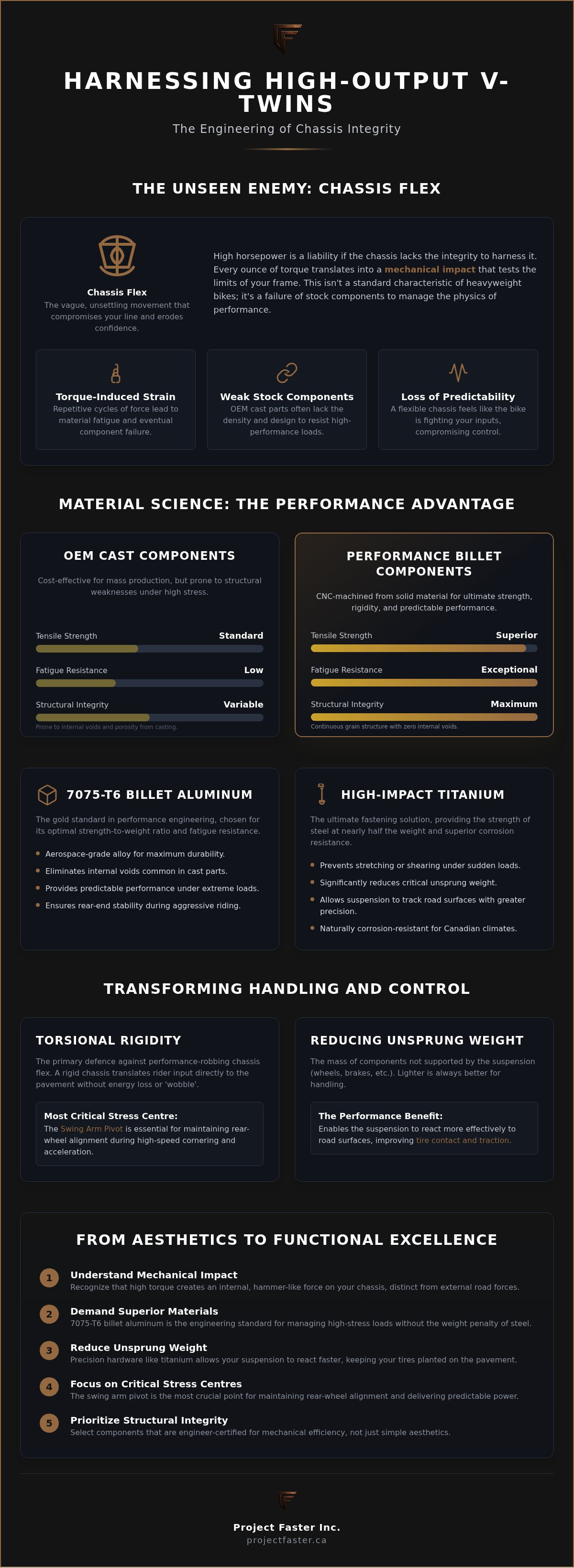
Horsepower is a liability if your chassis lacks the structural integrity to harness it. When you're pushing a high-output V-Twin through a high-speed corner, every ounce of torque translates into a mechanical impact that tests the limits of your frame and swing arm. You recognize the sensation of chassis flex; it's that vague, unsettling movement that compromises your line and erodes your confidence in the machine. Many riders accept this instability as a standard characteristic of heavyweight bikes, but it's actually a failure of stock components to manage the physics of performance.
We'll show you how precision engineering and advanced material science can eliminate these weaknesses to transform your ride's handling. You'll discover how managing mechanical stress through components like 7075-T6 billet aluminum and titanium hardware prevents material fatigue and ensures predictable power delivery. This guide provides the technical foundation you need to select upgrades that survive high-horsepower builds, shifting the focus from mere aesthetics to uncompromising functional excellence.
Key Takeaways
- Learn to distinguish between external forces and the internal mechanical impact that stresses your chassis under heavy acceleration.
- Discover why 7075-T6 billet aluminum is the engineering standard for managing high-stress loads without the weight of cast steel.
- Understand how reducing unsprung weight with precision hardware enables your suspension to react more effectively to road surfaces.
- Identify why the swing arm pivot is the most critical stress centre for maintaining rear-wheel alignment during high-speed cornering.
- Gain insights into selecting components that prioritize structural integrity and mechanical efficiency over simple aesthetics.
Defining Mechanical Impact in V-Twin Performance Engineering
Performance engineering requires a fundamental shift in how we define mechanical impact. While general definitions focus on the collision of two objects, V-Twin riders must view it as the sudden, violent transfer of energy through the drivetrain. A high-horsepower engine doesn't just provide steady acceleration; it delivers an immediate torque load that hits the chassis like a hammer. This internal mechanical impact forces every component to manage kinetic energy without compromising the bike's geometry. The goal of a performance build is to ensure that this energy moves through the machine efficiently rather than causing structural deformation. When the chassis fails to distribute these loads, the rider experiences a loss of control and eventual component failure. A truly high-performance machine isn't just fast; it's engineered to absorb and redirect the massive forces generated by aggressive riding. This is where the physics of material science meets the reality of the road, necessitating a chassis that acts as a rigid conduit for power rather than a flexible liability.
Force vs. Effect: The Dual Nature of Impact
Every time you drop the clutch on a high-output build, you're subjecting the frame to a stress load it wasn't originally designed to endure. This isn't a one-time event but a repetitive cycle of torque-induced strain. OEM cast steel components often lack the density to resist these cycles over the long term. Vibration and road irregularities contribute additional micro-impacts, leading to material fatigue that eventually compromises the safety of the vehicle.
Why Rigidity is the Countermeasure to Impact
Torsional rigidity is the primary defence against performance-robbing chassis flex. When a frame or swing arm twists under load, it creates a "wobble" that feels like the bike is fighting your inputs. By increasing rigidity at the pivot, we ensure rider input is translated directly to the pavement. Components like the Mako billet swing arm are engineered to provide this stability, managing the kinetic energy of aggressive riding while helping to control unsprung mass for better tire contact.
Material Science: Engineering Components for High-Impact Loads
Engineering for high-performance V-Twins demands a departure from traditional manufacturing methods. Most OEM components utilize cast steel or lower-grade aluminum alloys because they are cost-effective for mass production. However, these materials often fail when subjected to the extreme mechanical impact of high-horsepower builds. Superior performance is achieved through the use of Advanced materials for vehicle performance, which allow for a drastic reduction in mass without sacrificing structural integrity. By selecting aerospace-grade alloys, we can optimize the strength-to-weight ratio. This ensures the bike remains agile while handling the massive torque loads that would deform lesser materials.
The Superiority of Billet 7075 Aluminum
7075-T6 aluminum stands as the gold standard in performance engineering. Unlike cast components, which are formed by pouring molten metal into a mould, billet parts are CNC-machined from a solid block of material. This process eliminates the internal voids and structural porosity common in casting. The result is a component with a much higher tensile strength and superior fatigue resistance. We utilize this material for the Vector Billet Swing Arm to ensure the rear-end remains stable under duress. Our engineer-certified designs guarantee that every part can manage the torsional impact generated by aggressive riding styles. The grain structure of billet aluminum remains continuous, providing a level of predictability that cast alternatives simply cannot match.
Titanium: The High-Impact Fastening Solution
Fasteners are often the overlooked weak points in a performance chassis. Standard steel bolts can stretch or shear when subjected to sudden loads at suspension mounting points. Titanium offers a superior solution. It provides the strength of high-grade steel at nearly half the weight. This reduction in mass allows your suspension to track road irregularities with greater precision. Additionally, titanium is naturally resistant to corrosion. This is a vital feature for riders navigating the salt and moisture of Canadian climates. For a deeper technical dive, consult The Engineering Guide to Titanium Bolt Kits for Motorcycles. If you have questions about how these materials integrate with your specific build, you can reach out to our engineering team for a consultation. Choosing the right hardware is the difference between a build that survives and one that fails under pressure.
The Performance Impact of Reducing Unsprung Weight
Unsprung weight is the most critical variable in suspension tuning. It refers to the mass of every component located between the road and the suspension springs, including the wheels, tyres, brakes, and the swing arm itself. When your rear tyre hits a bump, that entire mass is accelerated upward. A heavy OEM swing arm carries significant momentum, forcing the shock absorber to work harder to arrest that movement and return the tyre to the pavement. This delay in response creates a momentary loss of traction, which is the negative performance impact of excessive unsprung mass. By reducing this weight, you allow the suspension to react with greater speed and precision, ensuring the tyre contact patch remains stable regardless of road conditions.
Suspension Dynamics and Kinetic Energy
The physics of suspension response is governed by the relationship between mass and force. A heavier assembly generates more kinetic energy during a vertical movement, requiring more damping force to control it. When you reduce the weight of the swing arm, you decrease the inertia the shock must overcome. This leads to smoother damping and a more composed ride. The PF Mako Billet Swing Arm is specifically engineered to address this, offering a significant mass reduction compared to stock touring components. Academic research into motorcycle chassis and suspension design demonstrates that optimizing these structural components is essential for maintaining mechanical grip under high-stress loads. Every gram removed from the rear assembly translates into a more responsive chassis that doesn't feel bogged down by its own weight.
Handling and Flickability
Reducing unsprung weight does more than just improve ride quality; it fundamentally alters the handling characteristics of the motorcycle. High mass in the rear assembly increases gyroscopic forces, which makes the bike resist leaning into a corner. By trimming weight from the swing arm and using lightweight hardware, you organize a better weight distribution that lowers the overall centre of gravity. This makes heavy V-Twin cruisers feel significantly more "flickable" during rapid transitions. You'll notice the impact on corner entry immediately, as the bike tips in with less physical effort and holds its line with greater tenacity. It transforms a sluggish touring machine into a precision instrument that responds intuitively to rider input. This mechanical efficiency ensures that your power delivery isn't wasted fighting the physics of a heavy, unoptimized rear end.
Critical Points of Failure: Where Impact Meets the Road
The swing arm pivot represents the primary stress centre of any high-performance motorcycle. It is the critical junction where the frame meets the rear assembly, and it must withstand the relentless torsional impact of a high-output V-Twin. When you launch a bike with significant horsepower, the engine attempts to twist the swing arm out of alignment. If the pivot point or the arm itself lacks the necessary rigidity, the result is lateral deflection. This displacement doesn't just affect handling; it forces the drive belt or chain out of its optimal path, leading to accelerated wear and potential drivetrain failure. Managing these forces requires an engineering approach that prioritizes structural stability over stock tolerances.
Aggressive deceleration introduces another set of variables. During hard braking, the forward momentum of the machine creates a massive force that tries to pull the rear wheel out of its vertical plane. Standard mounting systems often flex under this load, causing a vague feeling at the lever and inconsistent stopping distances. By reinforcing these critical failure points with precision-engineered hardware, you ensure that the bike remains composed under both extreme acceleration and emergency braking. High-impact stopping forces demand a chassis that doesn't yield under pressure.
Swing Arm Flex and Rear-End Instability
The phenomenon known as "bagger wobble" is frequently a direct result of the chassis's inability to manage torsional impact. This instability occurs when the rear end begins to oscillate independently of the frame, usually during high-speed cornering or when encountering road irregularities. The Vector Billet Swing Arm is designed to eliminate this lateral movement by providing a rigid, engineer-certified structure. For a detailed technical breakdown of how this component stabilizes the chassis, read The Engineering of Performance: A Guide to the Vector Billet Swing Arm.
Braking Impact and Radial Rigidity
Stopping a heavy, high-speed motorcycle requires more than just high-friction pads. It requires a mounting system that can handle the impact of deceleration without flexing. Traditional axial mounts are prone to twisting under heavy loads, which reduces the effective pressure on the rotor. Utilizing 108mm radial mounts provides a more direct path for braking forces, significantly improving lever feel and stopping power. Our Engineering Maximum Rigidity: The PF Vector 108mm Radial Mount Brake Arm Guide explains the physics behind this upgrade. If you're ready to optimize your build for high-impact performance, contact our engineering team to discuss your specific requirements.
Project Faster: Engineering for Maximum Performance Impact
Project Faster Inc. operates on a foundational principle: engineering excellence must precede aesthetic appeal. While the industry often prioritizes visual trends, we focus on the mechanical integrity required to survive extreme performance environments. Our Calgary-based facility utilizes advanced CNC machining to produce components that address the hidden performance variables most riders overlook. By focusing on the structural impact of torque and kinetic energy, we create parts that don't just fit; they perform. This is the Project Faster standard. Our engineering-first philosophy ensures that every component, from a swing arm to a titanium fastener, contributes to a more stable and predictable machine.
The Mako and Vector Series
Choosing the right chassis components is essential for managing the physical impact of a high-horsepower build. The Mako series is specifically engineered for the unique stress loads of touring models, providing the rigidity needed to eliminate rear-end instability during high-speed cornering. Conversely, the Vector Billet Swing Arm is optimized for the 2018+ Softail platform, focusing on weight reduction and torsional strength. Both series undergo rigorous engineer-certified testing to ensure they maintain their structural integrity under the most demanding conditions. You can browse our full range of solutions and shop all high-performance parts to find the specific fitment for your motorcycle.
Ready to Transform Your Ride?
A successful performance build requires a strategic approach to component selection. Starting with high-priority parts, such as the PF Liberator High-HP Exhaust or a billet swing arm, provides the most immediate improvement in power delivery and handling. Our team of specialists is available to help you navigate the technical requirements of your specific project. We understand that every build has unique goals, whether you're aiming for a track-ready setup or a high-performance long-distance cruiser. By selecting Canadian-engineered components, you're investing in hardware designed to withstand the harshest environments and the highest stress loads. Contact Project Faster Inc. today to consult with our engineering team and realize the full potential of your V-Twin.
Engineering the Future of Your Build
Managing the mechanical impact of a high-output V-Twin isn't about simply resisting force; it's about engineering a chassis that can effectively distribute and utilize it. You've seen how precision-machined 7075-T6 billet aluminum provides the torsional rigidity necessary to eliminate chassis flex and stabilize your machine. By reducing unsprung mass through lightweight hardware and optimized swing arms, you allow your suspension to track the road with surgical precision. These upgrades ensure every component is engineer-certified to survive high-stress applications without compromise.
Your build deserves hardware that matches your performance goals. Every Project Faster component is proudly Canadian engineered to meet the demands of the global high-performance market. If you're ready to build a machine that prioritizes structural integrity and real-world results over aesthetic fluff, our team is here to help you navigate the technical details of your next upgrade. We take your performance as seriously as you do.
Upgrade your V-Twin with Project Faster's high-impact components and experience the difference that precision engineering makes on the open road.
Frequently Asked Questions
What is the most significant performance impact of a billet swing arm?
The primary advantage is the total elimination of lateral flex and torsional deflection during high-torque acceleration. Billet 7075-T6 aluminum provides a rigid structural foundation that traditional cast steel cannot match. This ensures that your rear wheel remains perfectly aligned with the chassis, transforming a vague, unsettled rear end into a predictable and stable platform for power delivery.
How do high-impact loads affect my Harley's handling over time?
Repetitive stress loads lead to material fatigue and permanent deformation in stock components that aren't designed for high-output applications. As OEM parts flex under duress, they eventually lose their structural integrity, resulting in the notorious "bagger wobble" and compromised steering geometry. Replacing these parts with engineer-certified components prevents this degradation and maintains precision handling throughout the life of the build.
Can titanium bolts really withstand the impact of high-performance riding?
Titanium fasteners offer a superior strength-to-weight ratio that exceeds high-grade steel while effectively managing shear forces at critical mounting points. These bolts resist the stretching and fatigue that occur with standard hardware during aggressive launches and hard braking. Their durability ensures that your suspension and braking systems remain securely anchored even when subjected to the violent impact of extreme mechanical loads.
Why is structural rigidity more important than weight for managing impact?
Rigidity ensures that kinetic energy is processed by the suspension rather than being absorbed through the twisting of the frame or swing arm. While reducing mass is important, a lightweight component that flexes under load creates unpredictable handling and loss of traction. A rigid structure maintains the bike's geometry, ensuring that every impact from the road surface is directed into the shocks where it can be damped effectively.
What is the impact of unsprung weight on my motorcycle's suspension?
Excessive unsprung weight increases the inertia of the wheel assembly, which significantly slows the suspension's reaction time to road irregularities. When a heavy wheel hits a bump, it stays in the air longer because the shock must overcome more mass to return it to the pavement. Minimizing this weight allows the tyre to maintain a more consistent contact patch, directly improving both grip and rider confidence.
How do I know if my current components are failing under mechanical impact?
Common indicators include a "wavy" sensation during high-speed cornering, inconsistent drive belt tension, or visible stress marks on cast parts. If the bike feels unsettled during rapid transitions or requires constant steering corrections to hold a line, your stock chassis components are likely yielding under the stress. These symptoms suggest that the material has reached its elastic limit and can no longer provide the necessary stability.
Does a performance exhaust have an impact on engine longevity?
A high-performance exhaust system improves engine life by reducing backpressure and minimizing internal heat soak. Systems like the PF Liberator facilitate better scavenging, which pulls combustion heat away from the cylinder heads more efficiently. This reduction in thermal stress protects critical top-end components like valves and gaskets from premature failure during high-RPM operation, ensuring the engine operates within a safer temperature range.