


A high-output V-Twin engine is a mechanical liability if the chassis lacks the structural integrity to manage the resulting torque. Many riders focus exclusively on engine mapping while ignoring the physics of stability, which often leads to the dreaded speed wobble or inconsistent power delivery during aggressive acceleration. You likely recognize that professional motorcycle tuning doesn't just require a high-flow exhaust; it demands a precise synergy between every moving part and the frame itself.
This guide provides the technical foundation to master the principles of performance optimization by refining your bike's power delivery, chassis rigidity, and overall mechanical efficiency. We will help you move beyond basic adjustments to understand how engineering-led modifications create a more stable, responsive ride. You will learn to eliminate sluggish throttle response and reduce unsprung weight through the strategic use of billet components and titanium hardware. We will analyze the specific engineering principles that allow you to achieve a balanced, professional-grade build where every ounce of power is matched by uncompromising handling.
Key Takeaways
- Distinguish between engine mapping and chassis rigidity to ensure your V-Twin’s power delivery is optimized for real-world stability.
- Master the technical principles of motorcycle Tuning to eliminate high-speed instability and improve throttle response through superior structural geometry.
- Analyze the impact of material science on performance, specifically how reducing unsprung weight with titanium hardware enhances both acceleration and braking efficiency.
- Develop a systematic strategy for your build by establishing a mechanical baseline and prioritizing chassis strength before increasing engine output.
- Realize how precision-engineered components like the Vector Billet Swing Arm solve performance gaps that traditional stock hardware cannot address.
Defining Performance Tuning for Modern V-Twin Motorcycles
Performance tuning is often misunderstood as a narrow pursuit of raw horsepower. In reality, it is the deliberate optimization of both mechanical and electronic systems to achieve peak operational efficiency. While many riders focus strictly on engine tuning to modify fuel maps and ECU parameters; a truly professional build requires an equal emphasis on chassis tuning. This broader perspective ensures that every component, from the fuel injectors to the rear axle, works in a state of mechanical synergy. Without this balance, the torque generated by a high-output V-Twin can quickly become a liability rather than an asset.
Mechanical integrity serves as the foundation of any elite build. It represents the ability of the motorcycle to maintain its structural form under extreme stress. When you increase engine output without addressing the frame and suspension geometry, you create a mismatch that compromises safety and speed. A balanced approach ensures that your bike's power delivery does not overwhelm the frame, allowing for a ride that is both aggressive and predictable. Professional Tuning is about refining the entire machine to eliminate factory-standard weaknesses that hinder performance.
The Evolution of V-Twin Performance
Modern engineering has fundamentally shifted the performance landscape. Builders no longer prioritize simple horsepower figures at the expense of rideability. Instead, the focus has moved toward maximizing power-to-weight ratios and utilizing precision manufacturing to eliminate mechanical flex. Traditional tuning now includes the replacement of heavy, cast-iron or steel components with high-strength billet alternatives. This shift allows riders to reduce the overall mass of the bike while simultaneously increasing its structural rigidity, ensuring that every watt of power is converted into forward momentum.
Why Chassis Rigidity is the Missing Link
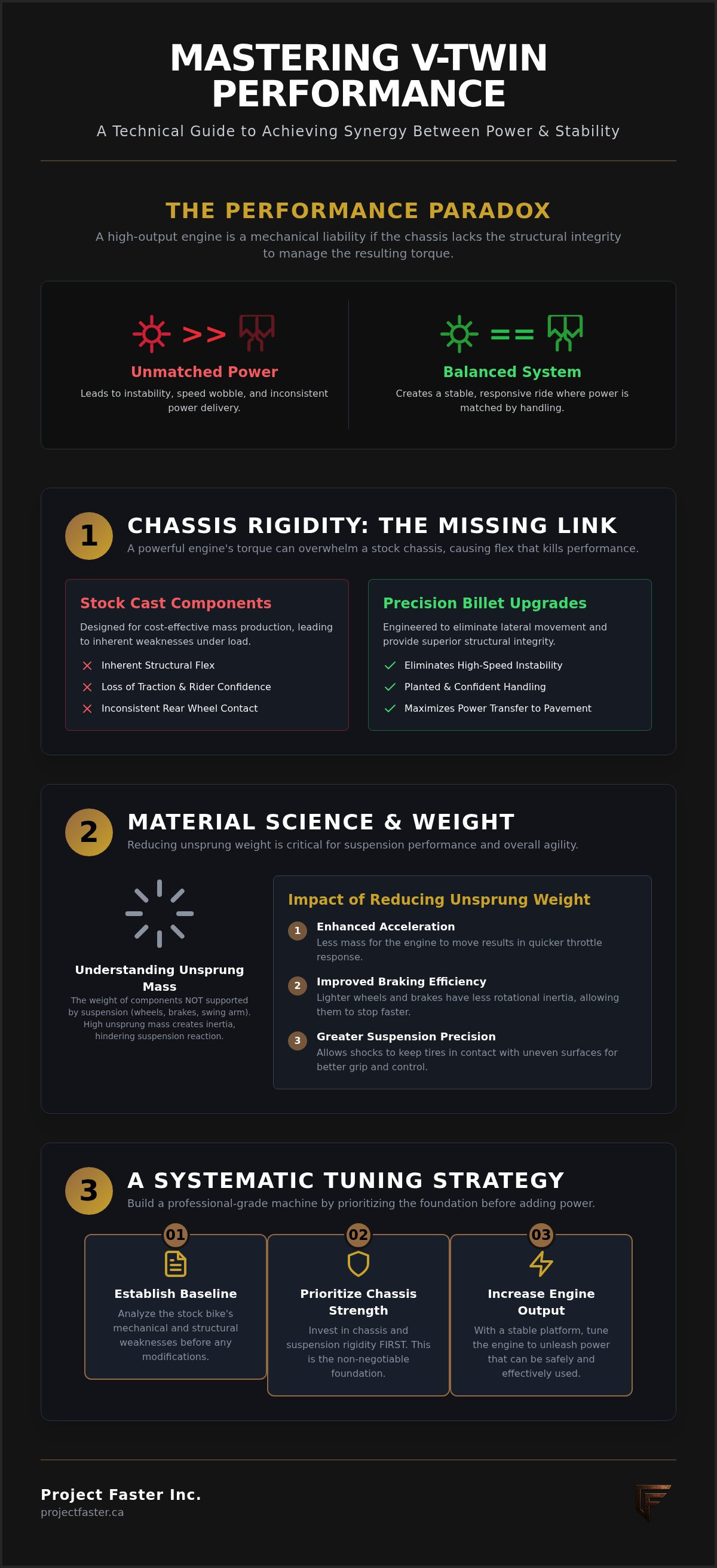
A powerful V-Twin engine generates immense torque that can easily overwhelm a stock chassis. When the frame flexes during high-speed cornering or heavy acceleration, the motorcycle becomes unstable, leading to a loss of traction and rider confidence. This is where high performance Harley parts become critical for stabilizing the build. The rear swing arm acts as the backbone of the handling system. If this component lacks the necessary rigidity, the rear wheel cannot maintain a consistent contact patch with the road, resulting in wasted energy and decreased safety. True performance is found where engine output and chassis stability meet in perfect alignment.
The Mechanics of Chassis Tuning: Stability and Geometry
The rear swing arm functions as the primary structural interface between the engine's torque and the pavement. In the context of performance Tuning, this component acts as the backbone of the entire handling system. During high-horsepower launches, the rear axle is subjected to massive torsional loads that threaten to twist the frame. If the chassis lacks sufficient rigidity, the energy intended for forward propulsion is instead absorbed by frame distortion, leading to instability and reduced traction. Establishing a stable geometry is the first step in ensuring that your bike can actually handle the power you've built into the engine.
Effective chassis management also requires a deep understanding of unsprung mass. This term refers to the weight of all components not supported by the suspension springs, including the wheels, brakes, and the swing arm itself. High unsprung weight creates significant inertia, forcing the shocks to work harder to maintain tire contact over uneven surfaces. By utilizing lightweight materials in these critical areas, you allow the suspension to react with greater precision. Engineer-certified components provide the predictable baseline needed to fine-tune these variables, ensuring that every adjustment yields a measurable improvement in ride quality.
Upgrading to Billet Swing Arms
Stock cast swing arms are typically designed for cost-effective mass production, which often results in inherent flex when pushed to the limit. In contrast, precision-machined billet versions offer superior structural integrity. The PF Mako Billet Swing Arm is engineered specifically for touring models to eliminate the lateral movement that causes high-speed instability. This increased rigidity allows the rear shocks to move through their stroke without interference from a twisting frame, resulting in a more planted and confident feel during aggressive cornering.
Optimizing Suspension Response
The interaction between shock absorbers and the swing arm pivot point is a study in mechanical leverage. When you reduce the mass at the rear axle, you significantly improve the 'flickability' of heavy V-Twin motorcycles, allowing for faster lean-angle transitions. Proper alignment and adherence to exact torque specifications are mandatory during the Tuning process to prevent binding or premature wear. If you require assistance in selecting the correct hardware for your specific geometry, you can consult with our engineering team to ensure your build meets professional standards.
Material Science in Tuning: Reducing Weight to Increase Power
Every gram saved on a motorcycle translates directly into improved acceleration and decreased braking distances. In the context of performance Tuning, reducing mass is just as critical as increasing horsepower. A lighter machine requires less energy to change its state of motion, meaning the engine's output is utilized more efficiently. While traditional steel components provide basic structural support, they often carry excessive weight that penalizes the bike's power-to-weight ratio. By focusing on material science, builders can unlock performance gains that are impossible to achieve through engine modifications alone.
Aerospace-grade materials like 7075-T6 aluminum have become the gold standard for high-stress components. This specific alloy offers a strength-to-weight ratio that far exceeds standard cast materials, allowing for thinner, more rigid designs that do not fail under pressure. Replacing heavy factory parts with precision-engineered billet alternatives allows builders to shed significant weight while simultaneously increasing structural integrity. This is a calculated mechanical upgrade that ensures the bike remains stable even as power levels increase.
The Titanium Advantage
Replacing critical fasteners with a titanium bolt kit motorcycle builders often overlook is a precision tuning tactic that yields measurable results. Titanium provides approximately 45 percent less weight than steel while maintaining comparable tensile strength. In high-vibration V-Twin environments, titanium's superior fatigue life and corrosion resistance ensure that critical connections remain secure over time. Reducing mass at the fastener level contributes to a lighter overall build. This physically translates into a more responsive and agile machine that handles with greater ease during high-speed transitions.
Thermal Management and Exhaust Tuning
Thermal efficiency is a vital yet frequently ignored aspect of engine performance. High-performance exhaust systems, such as the PF Liberator, are designed to optimize volumetric efficiency by managing backpressure and gas flow velocity. Proper exhaust Tuning ensures that spent gases are scavenged from the combustion chamber as quickly as possible, allowing for a fresher intake charge. High-HP builds require specialized V-twin performance exhaust benefits to sustain power levels during prolonged operation. Without effective thermal management, heat soak can degrade performance, making specialized exhaust systems an essential component of a professional-grade build.
Developing a Systematic Tuning Strategy for Your Build
A systematic approach is mandatory. You must first establish a mechanical baseline by measuring current performance metrics, which allows you to identify whether handling or speed is your primary weakness. Organizing the build around the foundation ensures that the chassis and brakes are prepared to manage future power increases. Rushing into engine modifications before stabilizing the frame often results in a machine that's fast but fundamentally uncontrollable. It's about ensuring the bike's structural integrity stays ahead of its horsepower.
Tuning requires incremental changes. By adjusting one variable at a time, you can accurately track the impact of each modification on the bike's dynamics. This methodical process prevents the confusion that arises when multiple changes are made simultaneously. While many aspects of a build can be handled by a dedicated rider, seeking a professional consultation with an engineer or master technician is often necessary for the final setup. These experts provide the specialized knowledge required to refine complex suspension and geometry settings to a professional standard.
Braking Performance as a Tuning Metric
Stopping power is critical. A well-tuned bike must be able to shed speed as effectively as it gains it. The PF Vector 108mm Radial Mount Brake Arm provides maximum rigidity at the caliper interface, ensuring that energy isn't wasted through component flex. Radial mounts are superior because they eliminate caliper twist, providing a consistent and firm lever feel during aggressive riding. This upgrade ensures your braking system remains reliable as you push the limits of your machine's output. Don't overlook the importance of deceleration in the performance equation.
Data Logging and Real-World Testing
Modern Tuning utilizes data logging. ECU tuners allow you to track air-fuel ratios in real-time, ensuring the engine operates within safe parameters. However, dyno numbers only tell part of the story. Real-world testing provides essential feedback regarding how the chassis reacts to various road surfaces. You must also adjust suspension sag and damping to account for new, lighter hardware installed on the bike. This ensures the suspension remains responsive and matched to the reduced mass of the build. If you're unsure how to structure your build, you can contact our engineering specialists for a professional assessment.
Engineering Excellence: Project Faster Components for the Ultimate Tune
Project Faster Inc. operates on a core philosophy where engineering-led design solves tangible performance gaps. We don't build for aesthetics; we build to eliminate the mechanical weaknesses that compromise V-Twin power delivery. Achieving the ultimate Tuning result requires hardware that can withstand the extreme torsional stresses of high-torque applications. By prioritizing mechanical integrity, you ensure that your performance gains remain consistent throughout the life of your motorcycle. We believe that a professional-grade build is only as good as its weakest structural link.
The Vector Billet Swing Arm represents a transformative upgrade for 2018+ Softail models. It replaces the inherent flex of factory cast components with a rigid, precision-machined structure that stabilizes the entire chassis. Using certified, high-strength materials like 7075-T6 aluminum is not just a performance choice; it's a safety requirement for any rider pushing their build to the limit. Reliability is the silent partner of speed. When you invest in high-quality hardware, you're protecting the engine Tuning work you've already completed by ensuring the frame can handle the output.
The Project Faster Difference
Our commitment to Canadian manufacturing ensures that every component meets rigorous precision standards. Every swing arm we produce carries an "Engineer Certified" status, providing peace of mind when operating at high speeds or under heavy loads. These components are designed to integrate naturally with high-output V-Twin builds, allowing you to focus on refining your machine without worrying about structural failure. We maintain a strict focus on materials science to ensure our parts offer the best possible strength-to-weight ratio. This professional-grade hardware is essential for those who take their performance seriously and demand real-world results.
Next Steps for Your Performance Build
Optimizing your motorcycle is a continuous process of refinement and testing. Whether you are addressing unsprung mass or seeking greater chassis rigidity, the right components make the difference between a project and a professional build. We invite you to browse our full shop collection to find the next precision upgrade for your machine. If you have specific fitment questions or require technical data regarding our manufacturing process, our engineering team is available to assist. You can contact our experts to discuss your specific build goals. Choose to optimize your build with Project Faster components today and realize the full potential of your V-Twin.
Mastering the Physics of V-Twin Performance
True performance is defined by the synergy between engine output and structural integrity. You have learned that optimizing a build requires moving beyond simple engine mapping to address the critical variables of chassis rigidity and unsprung mass. By prioritizing engineer-certified billet swing arms and aerospace-grade 7075-T6 aluminum, you ensure your machine can effectively manage the torque it produces. This systematic approach to Tuning creates a motorcycle that is as stable at high speeds as it is responsive in the corners.
Every component we manufacture is precision-machined in North America to solve real-world performance gaps. Whether you are reducing weight through titanium hardware or stabilizing your frame with a billet swing arm, the goal remains a balanced and reliable build. Mechanical excellence is not achieved by accident; it is the result of deliberate engineering choices that prioritize function over aesthetic trends. Take the next step in refining your machine's dynamics today.
Engineered for speed; shop Project Faster performance components
Your commitment to mechanical integrity will ensure your build performs at its peak for years to come.
Frequently Asked Questions
Does engine tuning affect the handling of my motorcycle?
Indirectly, yes. Increased torque and horsepower place higher torsional loads on the frame. If the chassis lacks the rigidity to manage this output, you'll experience a degradation in handling, such as mid-corner instability or rear-end wallow. Proper Tuning must account for these forces to maintain a balanced and safe ride.
What is the most effective way to reduce unsprung weight on a Harley?
Transitioning to billet aluminum components and titanium hardware is the most efficient method. By replacing the heavy factory swing arm and steel fasteners, you reduce the mass that the suspension must control. This allows the shocks to react faster to road imperfections, resulting in a more planted and responsive feel.
Why should I choose a billet swing arm over the stock cast version for tuning?
Billet swing arms provide superior structural integrity compared to factory cast versions. While cast aluminum is prone to flex under the high-stress loads of a performance engine, precision-machined 7075-T6 aluminum maintains its geometry. This ensures that the rear wheel stays aligned during aggressive acceleration, which is critical for stability.
How do titanium bolt kits contribute to performance tuning?
Titanium bolt kits allow for the precision reduction of unsprung weight at every critical connection point. Because titanium is approximately 45 percent lighter than steel, replacing fasteners on the wheels and brakes improves the bike's agility. This is a subtle but effective tactic in professional Tuning that yields measurable results in handling.
Can I tune my V-Twin's suspension without upgrading hardware?
You can optimize performance by adjusting preload, compression, and rebound settings to match your weight and riding style. However, stock hardware often has limited adjustment ranges. Upgrading to rigid components like a billet swing arm provides the stable foundation necessary to realize the full potential of these suspension adjustments.
What is the difference between stage 1 tuning and chassis tuning?
Stage 1 focuses on optimizing the engine's intake, exhaust, and fuel mapping to increase raw output. Chassis tuning, conversely, focuses on the structural and geometric aspects of the motorcycle, such as rigidity and unsprung mass. It ensures the bike's frame can actually handle the increased horsepower generated by engine modifications.
Is it necessary to upgrade my brakes when tuning for more horsepower?
Upgrading your braking system is mandatory when significantly increasing horsepower. Your ability to decelerate must always exceed your engine's ability to accelerate. High-performance radial mounts and rigid brake arms ensure consistent stopping power and prevent the caliper flex that often occurs during aggressive, high-speed braking scenarios.
How does a high-performance exhaust system change my engine's tune?
A high-performance exhaust system improves volumetric efficiency by increasing flow velocity and gas scavenging. This change in airflow requires a corresponding adjustment to the ECU's fuel maps to maintain the correct air-fuel ratio. Without this recalibration, the engine may run lean, leading to excessive heat and potential mechanical failure.